A vision beyond Aesthetics
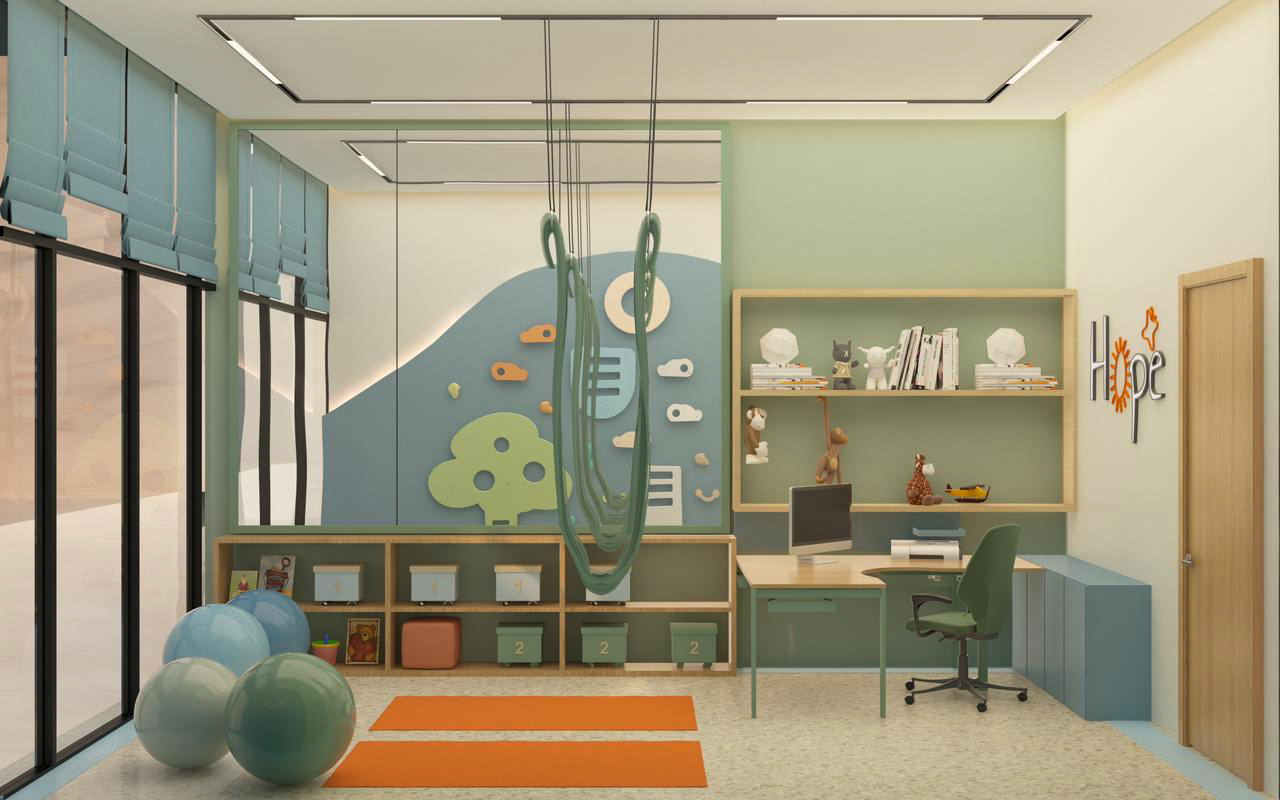
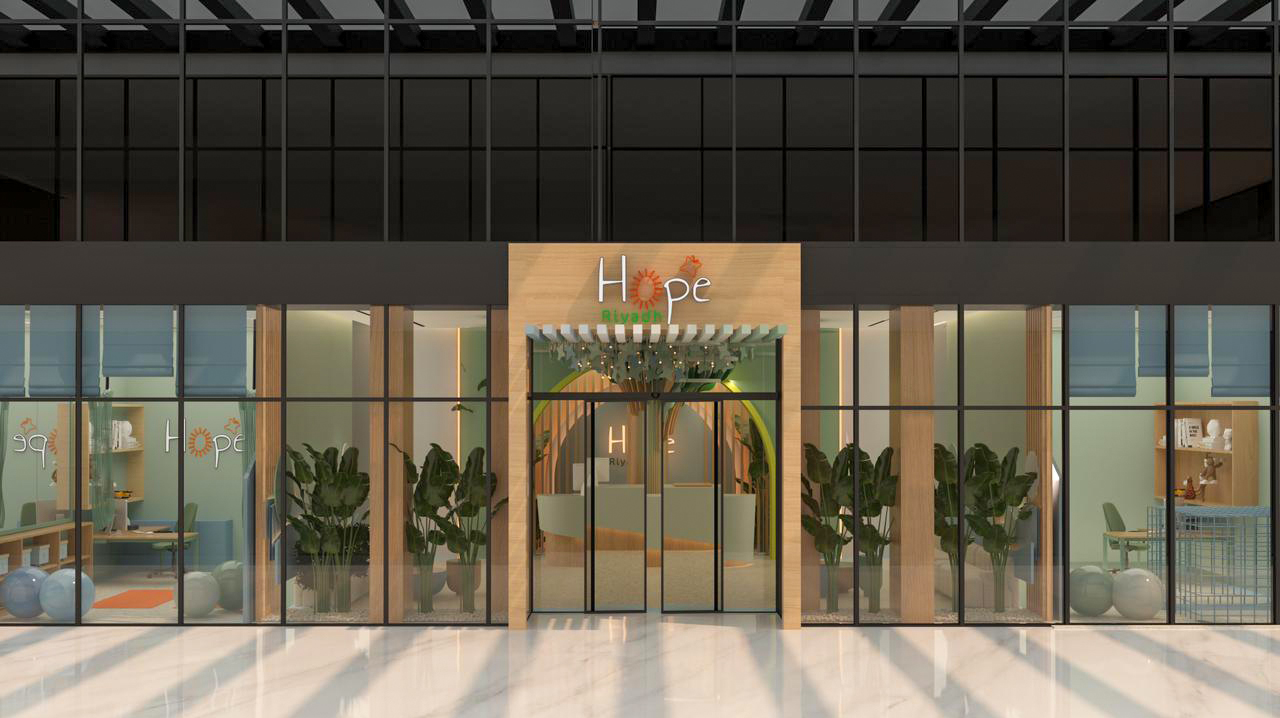
The design of hope rehab center was born from the belief that architecture can heal. Every line, texture, and color choice was created to support emotional well-being, especially for individuals on the autism spectrum. The goal was not just to build a space, but to crat a haven where calmness order and gentle stimulation come together in harmony – helping users feel grounded and safe while expressing themselves freely.
Colors that speak to the soul
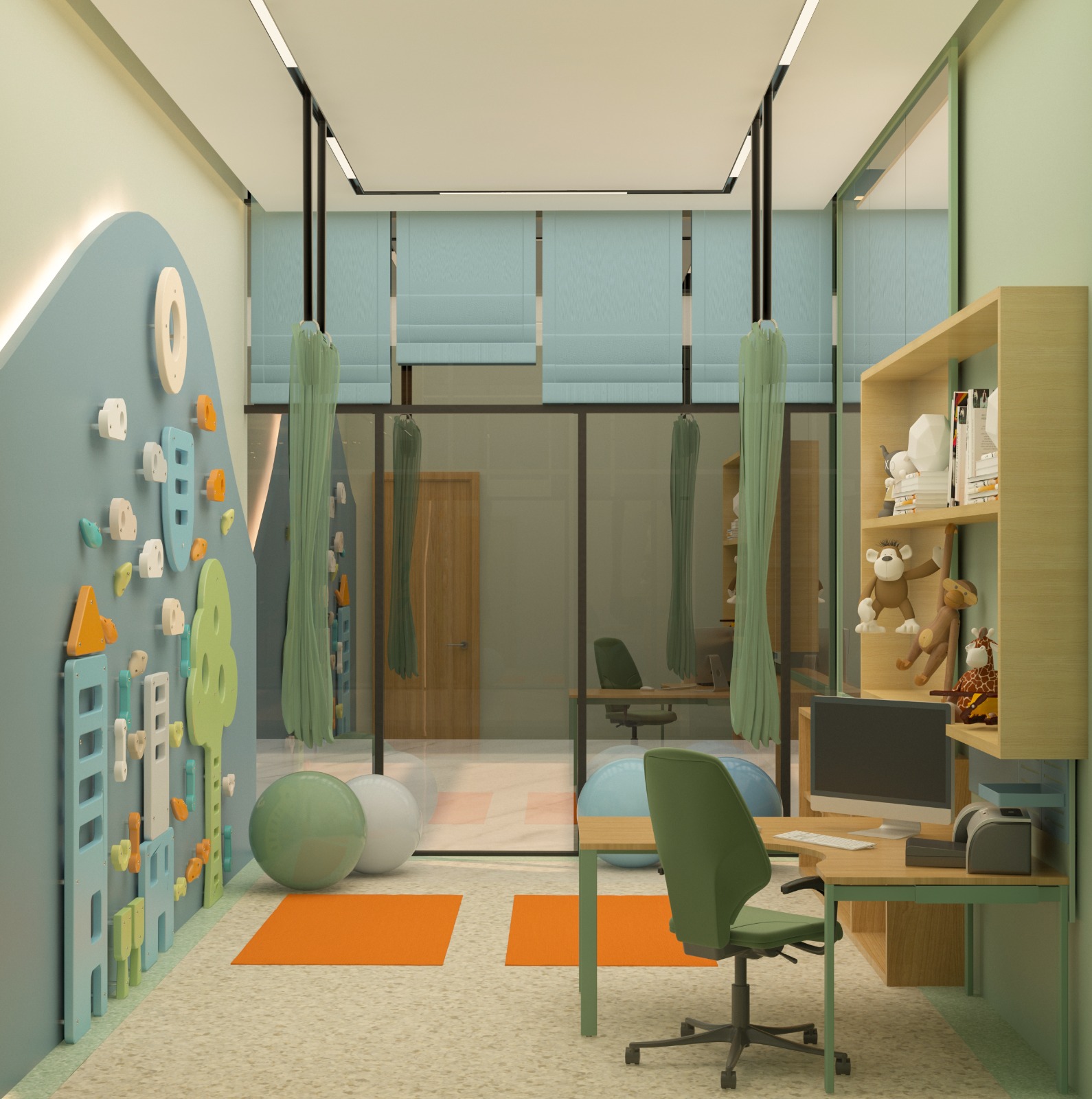
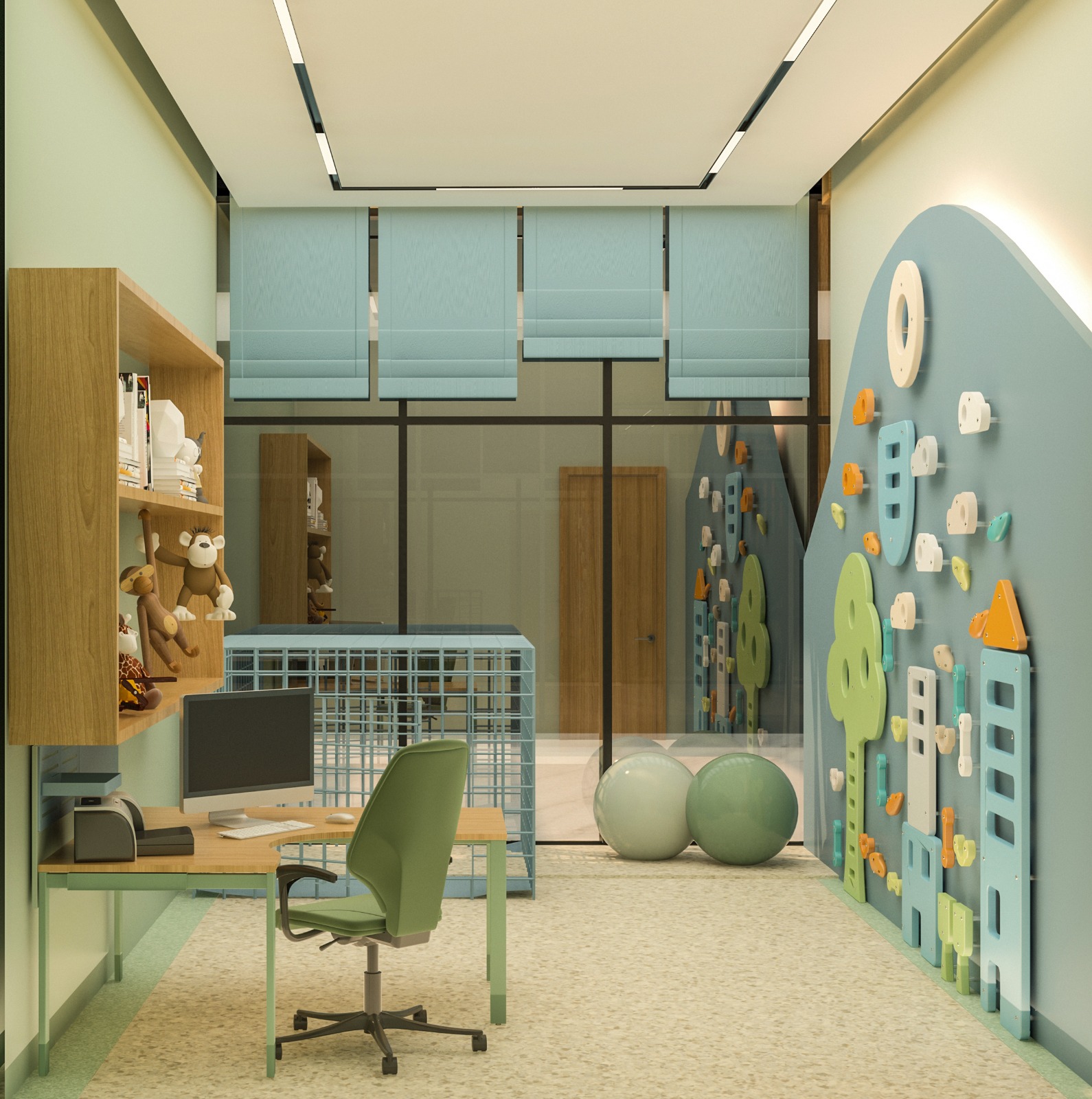
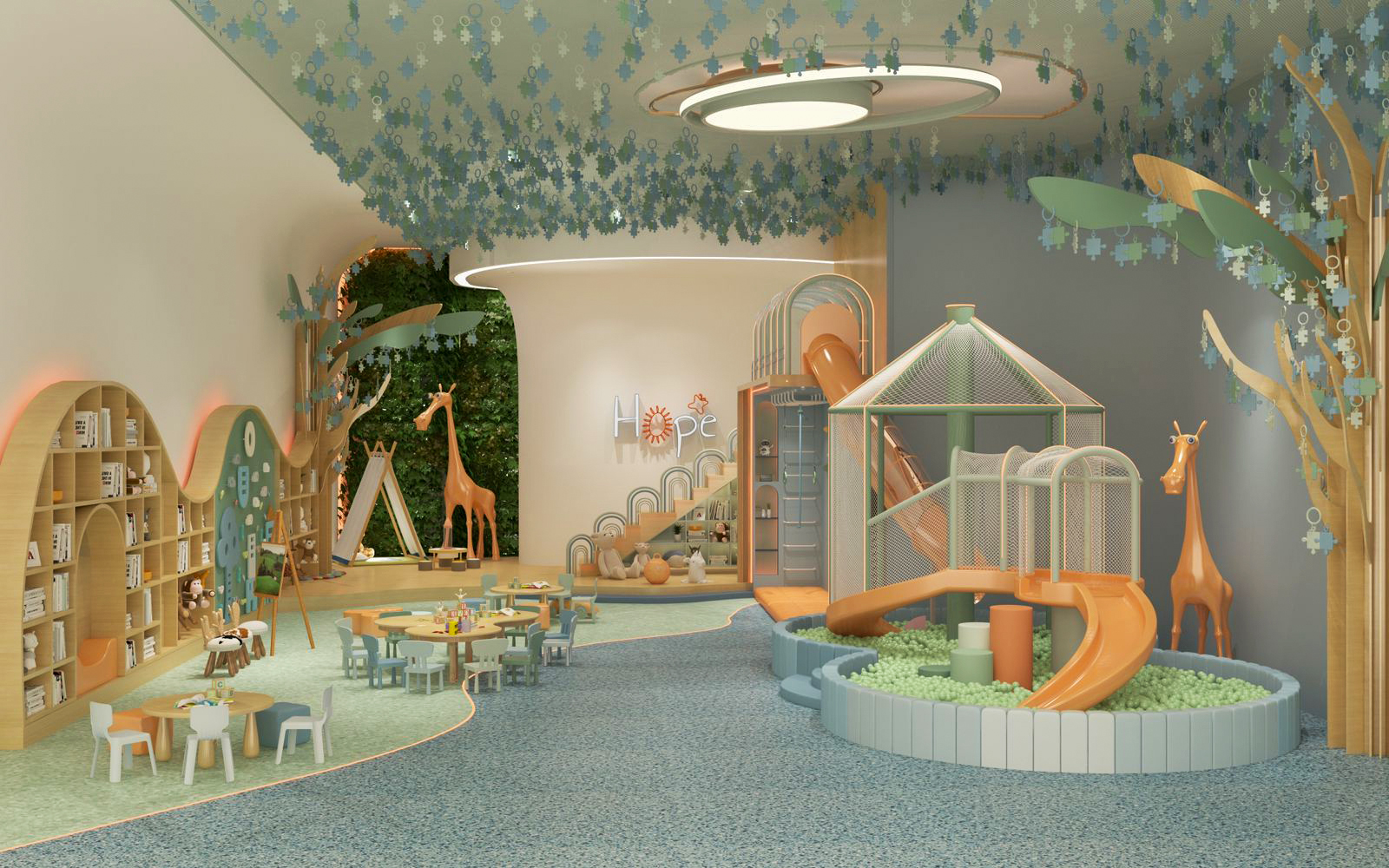
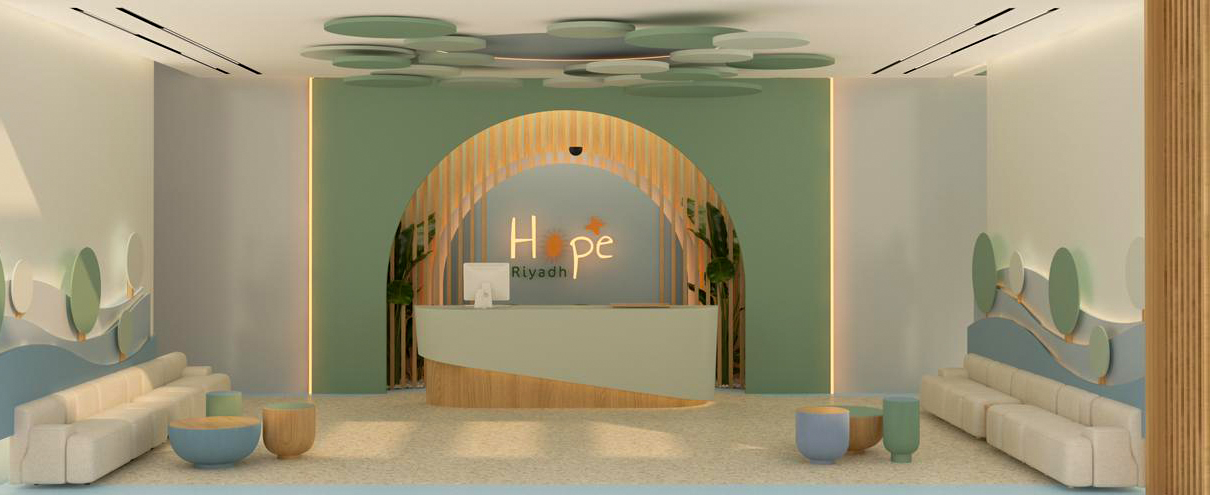
Soft greens, muted blues, and natural wood tones were intentionally chosen to evoke tranquility and balance. These hues mirror nature – the ultimate sensory regulator- and reduce over stimulation. The gradient transitions between walls and ceiling create a soothing visual rhythm, helping autistic individuals navigate the space intuitively while encouraging relaxation and focus.
forms and flow inspired by nature
Rounded edges, circular ceiling elements, and arching forms throughout the design reflect organic shapes that invite comfort rather than confrontation. The spatial flow encourages gentle movement and exploration, reducing anxiety and sensory tension. Every piece o furniture and partition was designed with tactile awareness in mind, offering both structure and softness.
Spaces for connection and expression
Beyond its visual serenity, Hope Rehab center is designed to foster community, self-expression and quite joy. Natural light filters through large glass panels, connecting interior warmth with the world outside. The space whispers inclusion – proving that when architecture listens to human needs, it becomes more than a building; it becomes a bridge between heart and healing.
Conclusion – Where design meets compassion
The hope rehab center stands as a reminder that design has the power to touch lives beyond form and function. When spaces are created with empathy, they become instruments of healing- nurturing minds, soothing emotions, and restoring balance. Through gentle colors, organic textures, and mindful geometry, this project redefines what it means to design for humanity: it’s about crafting not only beauty, but belonging.